
A quick note: This article contains affiliate links. If you make a purchase through one of our links, we may earn a small commission at no additional cost to you. As an Amazon Associate we earn from qualifying purchases, but we only link to products we genuinely use, love or think are worth exploring.
We spend a lot of time thinking about the wine in our glass. If you’ve been following us for a while, you’re well aware of this. But we don’t always think about the wine glass shape.
Where it was grown. Who made it. How long it was aged. Whether we should decant it. What we should pair with it. What memories does it evoke?
But what about the actual glass?
It turns out that the vessel holding your wine can have a surprisingly noticeable impact on what you smell, taste — and even how much you enjoy the overall experience.
While we certainly don’t believe you need a cabinet filled with dozens of different glasses to appreciate wine, good glassware is one of those relatively simple upgrades that can make the wines you already love even more enjoyable.

For us, that evolution started with our first set of “fancy” wine glasses — Riedel Vinums — and eventually led to a very different glass that first caught our attention during a tasting in Napa Valley.
We continue to explore other glassware and admire plenty of other glassmakers, too. The options are endless, but one thing remains true: the glass from which you choose to sip becomes part of your experience.
Why Does Wine Glass Shape Matter?
Wine tasting relies heavily on aroma.
Before you ever take a sip, aromatic compounds are escaping from the wine and making their way toward your nose. The shape of your glass can influence what happens to those aromas — and ultimately how you experience the wine.
Take a look at a collection of wine glasses and you’ll notice some dramatic differences. A Cabernet glass may be tall with a generous bowl. A Pinot Noir glass can be much wider. A white wine glass may be noticeably smaller.
Those shapes aren’t purely decorative.
The size and shape of the bowl and the diameter of the opening influence how much of the wine is exposed to air, how aromas collect inside the glass and even how the wine reaches your palate. A larger bowl, for example, creates more surface area between the wine and the air, while a narrower opening can help concentrate aromas toward your nose.
That’s also the idea behind varietal-specific glassware. Riedel, one of the companies most closely associated with the concept, designs different glass shapes around the characteristics of particular grape varieties and wine styles.
Does that mean the right glass makes a wine better? Not necessarily.
A thoughtfully designed glass simply gives you a better opportunity to experience what’s already there.
And there’s another part of good glassware that has nothing to do with tasting science: how it feels in your hand.
There’s something about a beautifully balanced, thin-stemmed wine glass that simply feels different. The weight, the delicate stem, the clarity of the glass and the way it showcases the color of the wine all become part of the experience.
It can make pouring an everyday bottle feel just a little more special without making the experience formal or fussy.
That’s very much our kind of laid-back luxury.


Want to See the Difference for Yourself?
Pour the same wine into two very different glasses.
Swirl them. Smell them side by side. Then taste.
Pay attention not only to the aromas and flavors, but to the entire experience. How does the wine look in each glass? How does the glass feel in your hand? How does it feel when you sip? Is one easier to swirl? Do you notice aromas more readily in one than the other?
You may be surprised by just how different the same wine can seem.
And Yes, Hold It by the Stem
Whatever wine glass you use, there’s one very simple habit worth adopting: hold it by the stem.
There’s a practical reason beyond looking like you know what you’re doing. Holding the bowl transfers heat from your hand to the glass — and eventually to your wine. Holding the stem helps prevent your body heat from unnecessarily warming what’s in your glass while also keeping fingerprints off the bowl so you can better appreciate the color and clarity of the wine.
And if you’ve invested in a delicate, thin-stemmed glass, holding it by the stem is part of what makes using it so enjoyable. So whatever wine glass you use, there’s one very simple habit worth adopting: hold it by the stem.
Do You Really Need a Different Glass for Every Wine?
No.
And this is where we think wine glass conversations can sometimes become unnecessarily intimidating.
You don’t need a separate glass for every grape variety in your wine collection.
If you’re just starting to upgrade your glassware, we’d rather see you buy a few really good, versatile glasses than feel like you need an entire cabinet devoted to specialized stemware. If there are certain wines you drink frequently — or bottles you particularly enjoy exploring — varietal-specific glasses can be a fun next step.
We started with Cabernet Sauvignon glasses and Sauvignon Blanc glasses because those were the varietals we drank most often. We used those glasses for just about everything at first.
Using the Sauvignon Blanc glass to enjoy a beautiful Tres Perlas Chardonnay. Despite using the “wrong” glass, the wine was still beautiful.

And that’s how better stemware became a fixture in our own wine cabinet…and how our collection began to grow over time.
When We Started Paying Attention to the Glass
Riedel Vinums were our first fancy wine glasses. Before those, we used glasses that we likely purchased at Target in the early 2000s — and we enjoyed plenty of wine in those glasses, too.
We bought our first set of Riedels, however, at Sur La Table during a Black Friday sale and gradually added more over the next couple of years. At the time, it felt like an upgrade. And it was.
The Vinum collection combines Riedel’s varietal-specific designs with machine-made crystal, making it a more approachable entry into higher-quality glassware. It was cost-effective AND they weren’t so extremely fragile that we were afraid to use them.
Years later, we still reach for ours regularly.
They’re elegant enough for a special bottle but practical enough that they don’t feel too precious to use.
And that matters to us. A Tuesday night bottle on the lanai shouldn’t require a special occasion to bring out a glass that we enjoy holding in our hand.

Why Vinum works for us:
- Varietal-specific shapes without feeling overly fussy
- Crystal glass with the clarity and feel we want from quality stemware
- Beautiful, thin stems that feel elegant in your hand, but aren’t so fragile we worry they’ll snap just looking at them
- Elegant enough for entertaining but comfortable for everyday wine sipping
- A wide selection of shapes for different varietals and wine styles
Technically, Vinum glasses are dishwasher safe, but ours have never seen the inside of one. We prefer to treat them gently, so we’ve always washed them by hand. Are we being overly protective? Maybe. But after collecting them over the years, we’re perfectly happy to give them a little extra attention.
The Glass That Made Me Look Twice
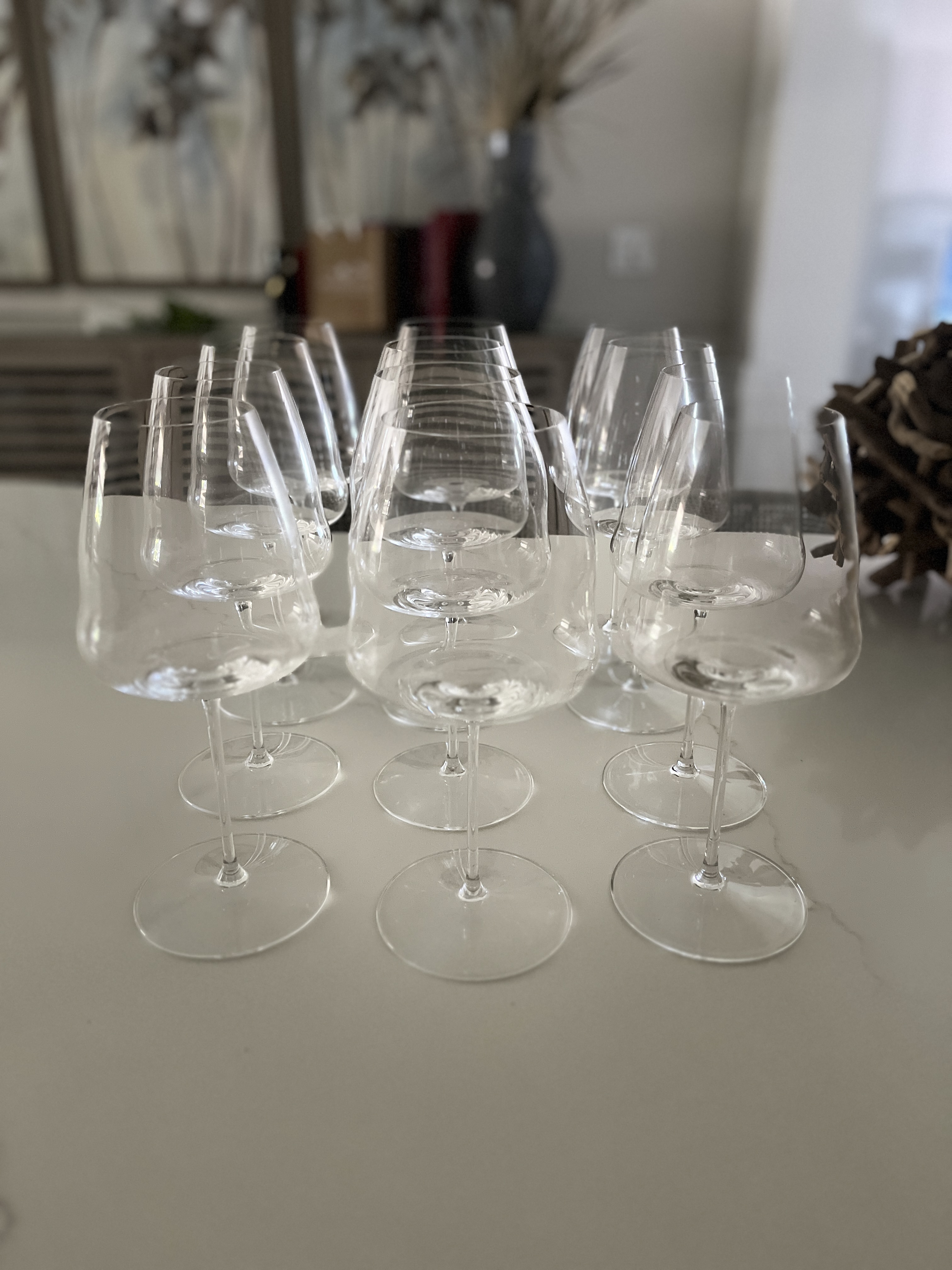
We first discovered Riedel WineWings during our very first visit to Tres Perlas in Napa Valley. And I’ll admit it: I fell for the shape before I knew anything about the science. I remember seeing those striking, wide glasses sitting on the tasting table before our first pour and thinking how beautiful they were. Once the wine was poured, I loved them even more.
On every return visit to Tres Perlas, I admired them all over again. But adding wine glasses to our collection seemed unnecessary. We had, and loved, our Vinums.
Then, during a quick girls weekend in Napa with my friend Michelle, I took her to Tres Perlas — because of course I did, it’s one of our favorite wineries! And as we tasted, I told her how much I loved those beautiful WineWings and how I’d been eyeing them since our first visit.
Apparently, I may have gushed a bit about those glasses.
After we returned home, Michelle surprised me by sending me my first set. It was an incredibly thoughtful gift — and once I started using the WineWings at home, I discovered there was much more to love than the way they looked.
When the Glass Becomes Part of the Experience
Those dramatic wings aren’t simply there to look beautiful, even though they are.
It’s a very different design from a traditional wine glass. And while I’ve come to appreciate what that shape does for the wine, I still love the WineWings just as much for the way they look.

Wine is a sensory experience, and for me, the visual part matters too. There’s something particularly beautiful about seeing the color of a wine displayed across that wide, distinctive bowl — whether it’s the deep ruby of a Cabernet Franc or the inky purple of a Petit Verdot. Add the delicate feel of that thin stem in your hand, and the glass itself becomes part of the experience.
A beautiful wine, in a beautiful glass, on the lanai as the sun sets? Perfection. That’s ultimately what I love about the WineWings. Their design isn’t only functional; it’s part of the pleasure of using them.


Do We Actually Have a Favorite?
This might be the wrong question. We own — and use — both.
Vinum is our classic. WineWings is our showstopper.
The Vinum glasses have a more traditional silhouette. They’re beautiful, versatile and easy to incorporate into everything from dinner with friends to an evening bottle at home.
WineWings feel different.
They’re dramatic. They’re conversation starters. And when we’re opening a bottle where we really want to spend some time exploring the aromatics, they’re especially fun to bring out.
| Riedel Vinum | Riedel WineWings | |
|---|---|---|
| Look | Classic, elegant | Modern, dramatic |
| Bowl | Traditional varietal-specific shapes | Wide, flat-bottomed design. Also with varietal-specific shapes |
| Best for us | Regular wine drinking and entertaining | Special occasions….or a Tuesday |
| Experience | Refined and familiar | Unique and fun |
| Our cabinet | Absolutely | Absolutely |
We don’t see one as replacing the other. They’re simply two different ways of experiencing wine. And on an especially successful night with friends, the counter may be littered with both.
Good Wine Glasses Don’t Have to Be Expensive
And while we’ve shared much about the wine glasses we love, they are an investment. However, you don’t necessarily have to pay full retail for them.
Our own collection certainly wasn’t purchased all at once. We bought our first Vinums during a Black Friday sale at Sur La Table and added more over several years.
If you’re looking to upgrade your glassware, keep an eye on:
- Black Friday and holiday sales
- eBay
- Facebook Marketplace
- Retailer clearance sales
- Secondhand and consignment shops
We’ve also purchased quality wine glasses secondhand. There is absolutely no shame in that. Good glassware can last for years, and people sell it for all kinds of reasons — perhaps it was a wedding gift they never use, an inherited collection they don’t need, or simply glassware they no longer have room for.
That’s a great opportunity to start — or add to — your own collection for a fraction of the original price. Just inspect used glasses carefully for chips, cracks or cloudiness before buying.
You don’t need to spend a fortune, and you definitely don’t need to build your collection overnight. A couple of beautiful glasses you genuinely enjoy using are a great place to start.
Keeping Our Wine Glasses Sparkling

Of course, beautiful wine glasses aren’t quite as beautiful when they’re covered in water spots.
Because we hand wash our better glassware, keeping it polished is part of the routine. We use our Vina Wine Glass Polisher to help remove water spots and fingerprints and get the glasses sparkling again before they go back into the cabinet — or onto the table.
It’s one of those simple wine tools that isn’t essential, but once it becomes part of your routine, you appreciate having it.
A good microfiber or glass-polishing cloth works well, too, and can be found inexpensively online or at many home stores. (We have this Riedel-branded one, and these, which work just as well as the Riedel-branded one.)
Our Take: Buy Better Glasses, Not More Glasses
If your wine glass collection currently consists of whatever happened to come home from a discount store years ago, or from a variety of wine tastings over the years, upgrading your stemware is one of the simplest ways to elevate your wine experience.
But don’t turn it into another wine rule. Just start with a couple of quality glasses that work with the wines you drink most often.
Shop the sales. Check the resale sites. Build your collection slowly.
Most importantly, use the good glasses. Don’t save them indefinitely for a special bottle or a special occasion. For us, good glassware fits perfectly into the way we think wine should be enjoyed: thoughtfully, but never too seriously.
Our first Vinums felt fancy when we bought them. Years later, they’re simply part of how we enjoy wine. And those WineWings I first admired during a tasting in Napa now have their own place in our wine cabinet — along with a pretty great story about how the first set got there.
Whether it’s a special Napa bottle we’ve been saving or something approachable poured on the lanai after a day of shark tooth hunting on Manasota Beach, the goal is the same.
Enjoying wine is about the total experience — the wine, the place, the people you’re sharing it with, and yes, even the glass in your hand.
Salud to enjoying your next sip from a glass you love holding. 🍷
