
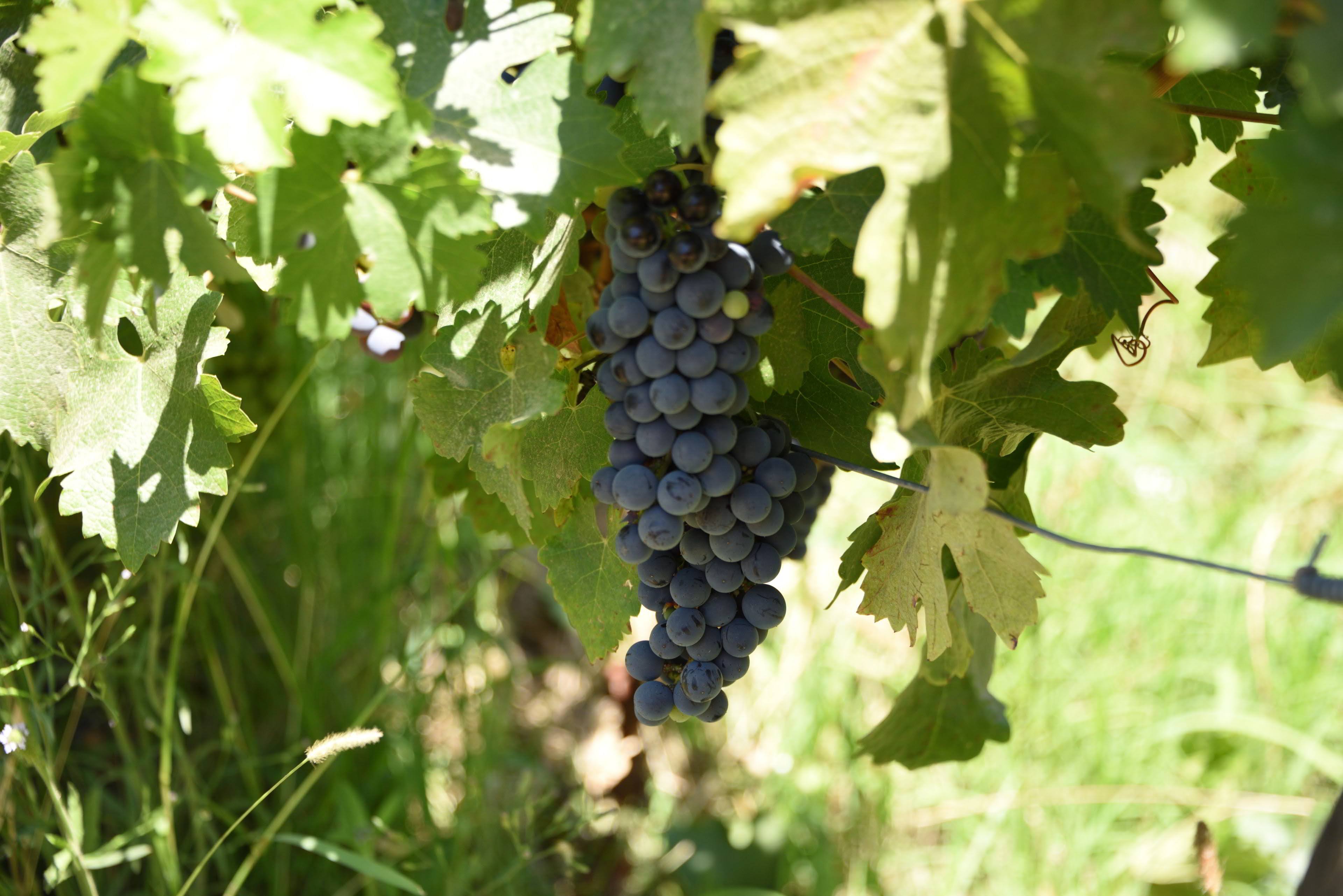
You’ve probably heard talk about wine crush.
“It’s crush.” “We visited during crush.” “Crush is crazy this year.”
It sounds like one specific step in winemaking. But in reality, people often use crush as shorthand for the whole wonderfully chaotic period when grapes start arriving at the winery and winemaking gets underway. And yes, at some point, some grapes actually do get crushed.
There’s a lot happening between picking a grape in the vineyard and getting it into a fermentation vessel. And just like deciding when to harvest, there are choices being made almost every step of the way.
First, get the grapes to the winery
Once grapes are picked, the clock starts ticking.
Freshly harvested grapes are delicate, and once berries are broken they become more vulnerable to oxidation and unwanted microbial activity. That’s one reason wineries generally want to get harvested fruit from the vineyard to the winery fairly quickly AND in good condition.
You’ll sometimes see grapes harvested in the cool early-morning hours or even overnight, as we discussed in the first article in our Behind the Bottle series. Cooler fruit can be easier to work with and helps slow some of the natural reactions that warmer temperatures can speed up — giving the winemaker a little more control over when those reactions begin.
How the grapes arrive into the winery varies, too. Some wineries use small picking bins that help keep clusters from being crushed under their own weight. Others may use larger containers, particularly when fruit is being harvested mechanically.
Either way, once the grapes reach the winery, the next question is: What actually gets to stay?


First stop: the sorting table
Depending on the winery and the fruit, grapes may be sorted to remove leaves, damaged or underripe fruit and anything else the winemaker doesn’t want moving forward.
If you’ve toured wineries during harvest, you may have seen people standing alongside a moving sorting table like this one at Jarvis Vineyards in Napa, inspecting clusters as they pass. That’s exactly what they’re doing.
We’ve even visited wineries where we were told they prefer women on the sorting table because they believe women have a softer touch and are less likely to damage the fruit. We can’t speak to the science behind that theory, but it certainly illustrates just how particular some producers can be about what happens to their grapes during crush.


And sorting can happen more than once. Some wineries sort entire clusters first, then destem the grapes and sort the individual berries again.
Others use technology such as optical sorters, like this one at Kenzo Estate in Napa, which uses cameras and programmed criteria to identify berries that don’t make the cut. As sub-par berries pass the cameras, small bursts of air can “blow” them out of the process.
Not every winery sorts this way, and more sorting isn’t automatically synonymous with better wine. The amount of sorting needed depends on everything from vineyard conditions and how the grapes were harvested to the style of wine being made.
But the idea behind it is wonderfully simple: Start with the fruit you actually want in the wine.
Then come the stems
Next comes another decision: Do the stems stay or go?
A destemmer separates individual berries from the stems that hold the grape cluster together. For many wines — particularly reds — most or all of those stems are removed before fermentation.
But stems aren’t necessarily unwanted. Some winemakers deliberately ferment some or all of the grapes as whole clusters, meaning the berries remain attached to their stems. Others might use a combination of whole clusters and destemmed fruit.
Why? Because stems can change the wine. They can contribute tannin and structure and can influence its aromas and flavors. Whether that’s desirable depends on the grape variety, how ripe the stems are and, most importantly, what the winemaker is trying to achieve.
So if you’re at a tasting and someone tells you a wine was made with “30% whole cluster,” you now know what they’re talking about. It means roughly 30% of the fruit went into fermentation as intact bunches rather than being completely destemmed first.

It’s not inherently better or worse. It’s another tool in the winemaker’s toolbox.
And then…the crush
Here’s where the name gets a little misleading. Crushing grapes does not mean pulverizing them into grape mush.
The idea is simply to break the skins and release juice. Modern crushers can do this quite gently, and depending on the wine being made, a winemaker may choose to crush all, some or none of the fruit.
And here’s an important distinction: Crushing and pressing aren’t the same thing.
Crushing breaks the berries open. Pressing uses pressure to separate juice from the grape solids — the skins, seeds and other material. That distinction becomes especially important because red and white wines generally take very different paths from here.
White wine: separate the juice
For most white wines, the winemaker wants to ferment the juice, not the skins.
The grapes are generally pressed before fermentation, separating the juice from the skins, seeds and other solids. This photo is an example of white grapes that have already been pressed.
That doesn’t mean the skins never matter. Some winemakers intentionally allow white grapes a period of skin contact before pressing, and skin-fermented white wines — often called orange or amber wines — take that idea much further.

But for the classic white-wine path, think: Grapes → press → juice → fermentation.
Even pressing involves decisions. How gently should the fruit be pressed? How much pressure should be applied? Different portions of juice produced during pressing can have different characteristics, and a winemaker may decide to keep them separate or blend them later.
So even something that sounds as straightforward as “get the juice out of the grapes” gives the winemaker choices.
Red wine: keep the skins
Red wine usually takes a different path. The grapes may be destemmed and crushed — although, as we now know, they don’t have to be — and the juice typically begins fermentation with the skins still there.
Why?
Cut open most red wine grapes and you’ll find that the juice inside is surprisingly pale. Much of the color we associate with red wine comes from pigments in the grape skins. But the skins contribute more than color. They also provide tannins and compounds that affect the wine’s aroma, flavor and texture. Seeds and, when they’re included, stems can contribute additional tannin and structure as well.
During fermentation, the winemaker therefore wants contact between the fermenting juice and those grape solids.
This introduces, however, an interesting complication: the skins float. As fermentation gets underway and carbon dioxide is produced, skins and other solids rise to the surface and form what’s called the cap. As a result, winemakers have to employ techniques to keep the juice and skins in contact.
This is where techniques such as punch-downs and pump-overs come into play. With a punch-down, the cap is physically pushed back into the fermenting juice.
With a pump-over, like this one at Lasseter Family Winery in Glen Ellen, California, juice is drawn from the bottom of the fermentation vessel and pumped over the cap.

How often and how aggressively this happens gives the winemaker yet another way to influence extraction — how much color, tannin and flavor the wine takes from the skins.
We’ll come back to that when we talk about fermentation in an upcoming Behind the Bottle article.
And where does rosé fit in?
Rosé gives us a great illustration of just how much skin contact matters.

Most rosé starts with red grapes. The difference is that the winemaker doesn’t generally leave the juice in contact with those red grape skins for nearly as long. One approach is direct pressing. Red grapes are pressed relatively quickly, so the juice has minimal contact with the skins and picks up only a small amount of color. This is one route to those very pale pink rosés you may have seen.
Another is short maceration. The juice remains in contact with the skins for a limited period — sometimes just a few hours — until the winemaker has the color and character they’re looking for. Then the juice is separated from the skins and fermentation continues more like it would for a white wine.
And you may occasionally hear the term saignée, French for “bleeding.” Here, some lightly colored juice is drawn off from a tank of red grapes early in the red-winemaking process and fermented separately as rosé.
There are other variations — this is winemaking, after all — but here’s the part worth remembering:
Red, white and rosé aren’t simply different-colored versions of the same process. What the winemaker does with the skins — and when — helps determine what kind of wine those grapes will become.
So what does “crush” really mean?
This is why crush is such a useful — if slightly confusing — term. Yes, grapes may literally be crushed.
But when someone at a winery says they’re “in the middle of crush,” they’re usually talking about something much bigger: grapes arriving from the vineyard, sorting fruit, destemming, pressing, filling tanks and barrels, starting fermentations, cleaning equipment and doing it all over again as the next load of grapes arrives.
And because different vineyard blocks and grape varieties don’t all ripen at exactly the same time, this can continue for weeks.

It’s one of the busiest and most important periods of the winemaking year.
The grapes have made it safely through harvest. They’ve been sorted, destemmed, crushed or pressed — or perhaps deliberately left whole. The winemaker has already made a surprising number of decisions.
And we haven’t even made wine yet! That’s what comes next.
Next in the Behind the Bottle series: Fermentation — where the magic (and the yeast) happens.